
The Role of KPIs in Business Management
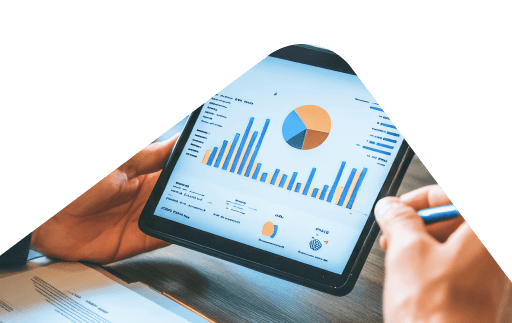
Key Performance Indicators, or KPIs, are the heartbeat of your business. These critical metrics give you a snapshot of your company’s health, performance, and profitability. However, the key to a KPI’s power lies in its name
The beauty of KPIs lies in their versatility. For some businesses, turnover might be a crucial metric. Personally, I lean towards profit generation from turnover, but each business has its unique rhythm. Other enterprises might find the Gross Profit Percentage derived from each sale as their primary metric. It’s a powerful metric, indeed, one I frequently emphasise with my clients.
So instead, focus sharply on just 3 or 4. Any more, and their significance starts to wane – they simply aren’t ‘Key’.
Identifying Your Key Performance Indicators
The beauty of KPIs lies in their versatility. For some businesses, turnover might be a crucial metric. Personally, I lean towards profit generation from turnover, but each business has its unique rhythm. Other enterprises might find the Gross Profit Percentage derived from each sale as their primary metric. It’s a powerful metric, indeed, one I frequently emphasise with my clients.
Other KPIs could be efficiency, or utilisation – be it people or asset. The trick is to identify the 3 or 4 metrics most integral to your business.
Here’s a list of some common KPIs to give you an idea of some useful ones:
- Turnover: This measures the total revenues generated by a business in a specific period. It’s an important indicator of the volume of sales a company can generate, but it’s not always indicative of profitability, as it doesn’t account for the cost of generating those sales.
- Gross Profit Percentage: Also known as Gross Margin, it measures the proportion of profit made on sales after considering the cost of goods sold, but before considering overhead and other operating expenses. It’s a critical measure of profitability and business efficiency.
- Profit Margin: A very important KPI as it gives a clear picture of the profitability of the company. It measures the earnings remaining after all expenses have been deducted. You can read more about how to understand your turnover, gross profit percentage, profit margins and other elements of your profit and loss account here.
- Efficiency: This KPI measures how effectively a company converts inputs (like labour, materials, and machinery) into outputs (products or services). It can be measured in various ways depending on the business, such as production efficiency or operational efficiency.
- Utilisation: This could refer to people utilisation or asset utilisation. People utilisation measures the percentage of billable hours out of total working hours for employees. Asset utilisation, on the other hand, refers to how much of a company’s available assets are being used and generating income.
- Cost Variance (CV): This measures the budgeted cost of work performed against the actual cost. A positive CV indicates costs are under budget, and a negative CV indicates over-budget.
- Schedule Variance (SV): SV is used to measure if a project is ahead or behind the planned schedule. It’s calculated by subtracting the Budgeted Cost of Work Scheduled (BCWS) from the Budgeted Cost of Work Performed (BCWP). Of course, you can only measure this is you are effectively capturing information from the site!
- Safety Incidents Rate: Construction is a high-risk industry, and maintaining a low incident rate is important for worker safety and company reputation.
- Employee Turnover: High turnover can indicate dissatisfaction among workers, and it can be costly to recruit and train new employees.
- Construction Quality: Number of defects or reworks required can be a measure of construction quality, which impacts customer satisfaction and costs.
- Billed vs. Earned Revenue: This measures the cash flow efficiency of the business. If a company is billing more than it’s earning, it could face cash flow issues in the future.
- Project Overrun: The number of projects going over budget or schedule gives an indication of planning and execution effectiveness.
- Change Order Frequency: A change order is a modification of the original project scope. Frequent change orders can impact project profitability and timelines.
- Customer Satisfaction: This can be measured through client surveys or repeat business. High customer satisfaction can lead to more business opportunities.
- Bid Conversion Rate: This measures the percentage of bids that are converted into contracts. A high rate indicates an effective bidding process and a good reputation in the market.
- Cycle Time: This measures the total time from the beginning to the end of your process. In construction, a shorter cycle time can indicate efficiency and can lead to more projects in a given period.
- Inventory Turnover: This is particularly important if your construction company stores a lot of materials. High turnover indicates you’re using materials efficiently and reducing storage costs.
- Debt to Equity Ratio: This financial KPI provides insight into a company’s leverage and risk. A high ratio might indicate that a company has been aggressive in financing growth with debt, which can result in volatile earnings.
- Return on Investment (ROI): This calculates the profit made from an investment as a percentage of the original investment. A higher ROI means a more profitable investment, which is crucial in a capital-intensive industry like construction.
Remember, the ‘key’ in KPIs is all about focusing on a few metrics that are most important in your specific business context. Choose the ones that align with your strategic goals and provide meaningful insight into your business performance.
Tracking and Managing Your Key Performance Indicators
Once you’ve identified your KPIs, your next step is to track them, monitor them, and manage them.
This is not an annual or semi-annual activity.
It’s a pulse you check daily, a performance you assess weekly, and trends you evaluate monthly. This constant vigilance is what allows you to steer your business in the right direction.
Measuring Success: Beyond Instinct
How do you tell if you’ve had a good day, a good week, or a good month in your business? Is it a gut feeling? Is it the bustle in your office or store? While instinct has its place, I urge you to look beyond.
Look at the numbers – what numbers tell you that you’ve had a successful day or week or month? It’s these numbers we need to manage, report, and understand regularly. This is how we bring the focus back onto what truly matters.
The Impact of Focused Key Performance Indicator Management
The magic happens when you measure, manage, and focus on your chosen KPIs. This focus is what drives profitability. When you know your numbers, understand your key metrics, and keep a keen eye on your KPIs, your business will thrive. Your profitability will increase, your cash flow will improve, and as a result, the shareholder value will go up.
The Bottom Line
Understanding and effectively using KPIs can be the difference between simply managing a business … and leading a successful, profitable and thriving business!
A business that knows its numbers, identifies its key metrics, and stays committed to its KPIs is a business poised for success!